Book 100% verified experiences from Viator. Skip-the-line convenience, cashless booking, and flexible 24-hour free cancellation policies are standard on all listings.
Join top-rated local guides on tip-based walks exploring the medieval Castle, panoramic sunset viewpoints, and authentic Spanish flavors. €0 upfront reservation.
 GetYourGuide
€70 (~$76)
GetYourGuide
€70 (~$76)
 GetYourGuide
€75 (~$82)
GetYourGuide
€75 (~$82)
 Viator
€107 (~$117)
Viator
€107 (~$117)
 GetYourGuide
€48 (~$52)
GetYourGuide
€48 (~$52)
 Viator
€33 (~$36)
Viator
€33 (~$36)
 GetYourGuide
€30 (~$33)
GetYourGuide
€30 (~$33)
 GetYourGuide
€25 (~$27)
GetYourGuide
€25 (~$27)
 GetYourGuide
€30 (~$33)
GetYourGuide
€30 (~$33)
 GetYourGuide
€60 (~$65)
GetYourGuide
€22 (~$24)
GetYourGuide
€60 (~$65)
GetYourGuide
€22 (~$24)
 GetYourGuide
€45 (~$49)
GetYourGuide
€45 (~$49)
 Viator
€9 (~$10)
Viator
€9 (~$10)
 GetYourGuide
€30 (~$33)
GetYourGuide
€30 (~$33)
 Viator
€7 (~$8)
Viator
€7 (~$8)
Avoid the massive queues at on-site ticket offices during high-season hours by reserving your guided spots online.
Many local sites and counters are strictly cash-only; booking online eliminates currency exchange and ATM runs before the walk.
Our listings include a standard 24-hour free cancellation policy, allowing a full refund if weather or travel schedules change.
Whether you are seeking historic cobblestone strolls through medieval citadels or mountain treks into prehistoric sinkholes, here is what makes Sardinia's top walking destinations so special.
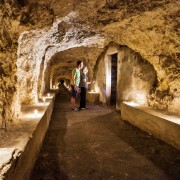
With over 3,000 years of continuous settlement, Cagliari is built across seven limestone hills. Below its vibrant surface lies a hidden network of more than 130 kilometres of tunnels, Roman cisterns, and WWII bomb shelters carved directly into the white rock.
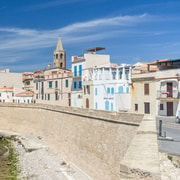
Known as Barceloneta (Little Barcelona) due to its Aragonese conquest in 1354, Alghero retains authentic Catalan architecture and dialect. Its 16th-century sea walls feature 7 intact defensive bastion towers looking out over the Balearic Sea.
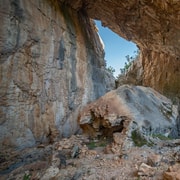
The Iglesiente coastline combines 8,000 years of mineral extraction with breathtaking sea vistas. Highlights include Laveria Lamarmora—an 1897 cliffside washery with 4 tiers of stone arches clinging to red slate cliffs—and the 133m Pan di Zucchero rock stack.
Situated at the foothills of the limestone Supramonte range (where peaks exceed 1,460m), Dorgali is the gateway to mountain wilderness. It sits adjacent to Europe’s deepest gorge, Gola di Gorropu, with its 500-metre vertical limestone walls.
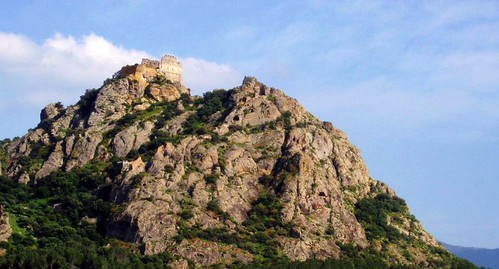
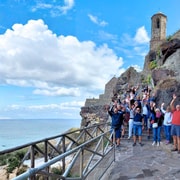
Founded in 1102 AD by Genoa’s noble Doria family, Castelsardo sits atop a steep 114m dark trachyte volcanic rock projecting into the Gulf of Asinara. It boasts over 900 years of unbroken fortification.
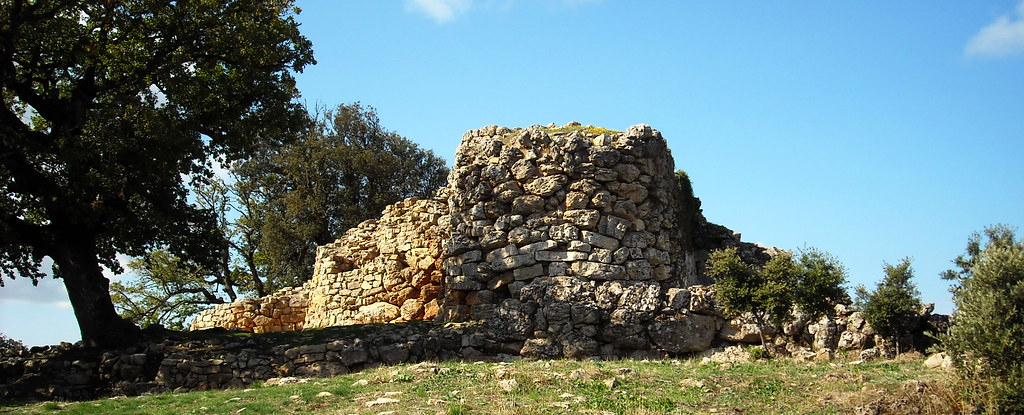
Hidden inside a massive collapsed limestone sinkhole (dolina) near Mount Tiscali (515m altitude), this prehistoric Nuragic village dates from 1500 to 800 BC. Over 40 stone circular huts remained hidden from invaders for millennia.
If you prefer to walk independently, here are two hand-selected routes starting from Cagliari. They have distinct levels of challenge for families and active trekkers.
This easy walk traverses the flat dirt tracks of the Molentargius-Saline Regional Park. Families with children will enjoy the wide, stroller-friendly paths that wind along the historical salt pans. The walk begins at the historical 1930s administrative office of Edificio Sali Scelti (39.2277° N, 9.1378° E). The path leads past the freshwater Bellarosa Minore basin, which is a nesting ground for ducks and coots. You will walk further to the saltwater Bellarosa Maggiore basin. This lagoon has hundreds of pink flamingos (known locally as Genti Arrubia) that build mud nests in the salt flats. Wooden observation cabins are placed along the path to let you watch the birds without causing disruption. The route covers 5.2 kilometres (3.2 miles) of flat terrain with zero elevation changes, terminating at the Poetto beach promenade near Marina Piccola (39.1988° N, 9.1635° E). Admission is free of charge (€0 / ~$0). Bring sun hats, drinking water, and binoculars for the children.
This strenuous trail scales the sheer limestone cliffs of the Sella del Diavolo promontory. Walkers start at the Calamosca Bay trailhead (39.1891° N, 9.1558° E), right next to the historic lighthouse. The rocky trail climbs steeply above the emerald sea, giving panoramic views of the Gulf of Cagliari. The path winds past the 16th-century Spanish Tower of Sant'Elia, which was built to spot Barbary pirates. Further along the ridge, you will walk past concrete gun emplacements and deep trenches built during the Second World War. The trail ends at the summit ruins of an ancient Roman temple (39.1900° N, 9.1642° E), which overlooks the Poetto beach coast. The walk covers 6.4 kilometres (4.0 miles) round-trip with a total climbing shift of 135 metres (442.9 feet). The trail has loose gravel and steep drops, so wear shoes with solid grip. Carry 1.5 litres (0.4 gallons) of water per person, as the exposed ridge lacks shade.